
Barnegat Previous Residents by Era
One Barnegat address yields different evidence depending on the era. Recent recorded documents show a transfer. Older deed books preserve the earlier chain of title. A reverse directory can supply an address-to-occupant lead for a single edition. A census captures a household on its enumeration date. Barnegat publishes no complete online shelf list of every local directory year. That gap matters. Treat any exact directory year as a question for the Ocean County Library. Ask local historical collections too, rather than copying a fact from a generic list.
| Source | Period available | Where to use it | What it can establish |
|---|---|---|---|
| Barnegat official-record index | Barnegat online records begin April 1, 1977 | Ocean County Clerk SearchNG | Recent Barnegat deeds, mortgages, liens, releases, parties, and land identifiers |
| Earlier Barnegat deed books and indexes | Pre-1977 Barnegat trail; county deeds through 1900 were microfilmed and digitized | County Clerk, State Archives, and FamilySearch route | Earlier Barnegat grantor and grantee sequence with legal descriptions |
| Barnegat city and reverse directories | Exact Barnegat runs are not published online | Ocean County Library, Historical Society, or HeritageQuest | Dated Barnegat name, address, telephone, and household leads when present |
| Barnegat federal and state census | Federal census public through 1950; state census 1855 to 1915 with varying coverage | Library databases, Archives, and genealogy collections | Barnegat household composition and residence context at the census date |
| Barnegat permit records | Current searchable database; earlier online cutoff not stated | Barnegat FTG search and a targeted OPRA request | Barnegat construction, occupancy, contractor, and alteration dates |
| Barnegat Sanborn map sheets | 1909 to 1910 | Library of Congress digital collection | Barnegat building footprint, use, construction material, and street context |
Start with the Barnegat period you actually need. A recent transfer question belongs in the Clerk index. Anything crossing the online cutoff belongs with older books and archive repositories. Who lived at a particular Barnegat place in a given year usually takes a directory or census check, plus a deed, map, permit, obituary, or probate record to corroborate the household.
The Barnegat 1977 Deed Line
The Ocean County Clerk's SearchNG landing page sets April 1, 1977 as the start of the online official-record collection. For Barnegat previous residents research, that date is a practical dividing line. A current recorded Barnegat transfer makes a strong first document. It is still not the start of the property's story. When the backward search hits the cutoff, move on. The Clerk's older books and indexes carry the chain further. The New Jersey State Archives help too. So does the FamilySearch county-deed material. A missing browser result is never the end of it.
The index searches parties and legal identifiers, with no guaranteed street-address field for Barnegat. Search modes include party name, town, date, instrument number, book and page, lot and block, legal description, map, and parcel. The Clerk labels the public data unofficial and recommends trying spelling variations. Compare document status and the Barnegat land description each time. A deed tied to the right Barnegat parcel beats a similar name on an unrelated Barnegat property.
The online-coverage notice comes from the Ocean County SearchNG page.
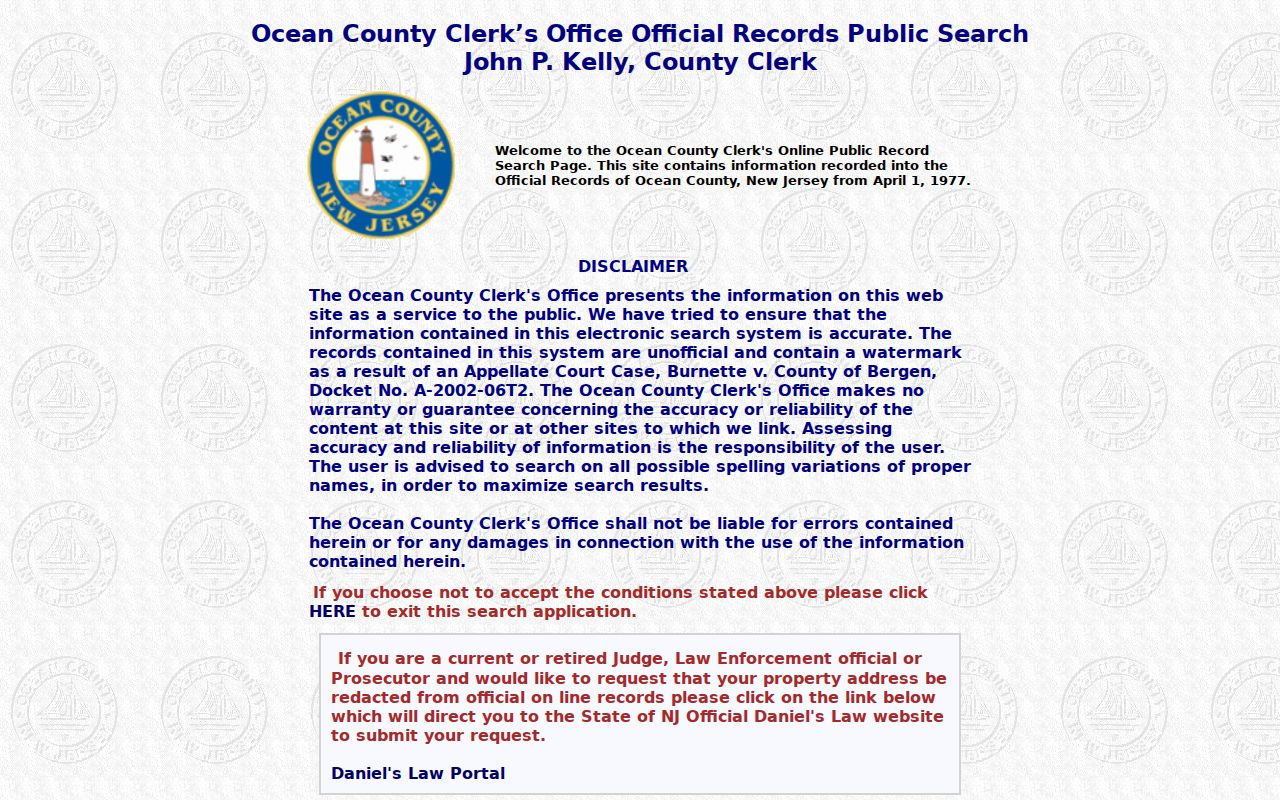
The SearchNG image documents the online coverage notice that shapes any Barnegat deed trail. It marks the starting line for modern records. No evidence vanished on that date. Earlier records simply live in books, microfilm, and archives.
Note: A name missing from the online index may call for a book, microfilm, archive, or spelling-variant search.
Trace Barnegat Previous Residents in Deeds
A Barnegat deed chain follows the land's legal description, not just the modern street address. Begin there. Gather the current municipality, street number and name, block, lot, qualifier, and legal description. Pull the current owner from the Barnegat assessor. You can also draw Barnegat parcel details from the Ocean County tax-list system. In the Clerk index, locate the present owner's Barnegat purchase document. Narrow the result to Barnegat and the relevant date. Then compare the book and page or instrument number against the Barnegat parcel. The seller named on that deed becomes the next prior grantee to search.
- Record the current parcel identifiers and owner or mailing context from the tax source. Preserve the municipality, block, lot, qualifier, and any legal-description wording.
- Find the current purchaser as a grantee in the Clerk's official-record search. Open the available document and verify the parcel against the deed description.
- Write down the seller, also called the grantor, along with the recording date, consideration, and any prior-deed reference shown in the instrument.
- Search that seller as a grantee to identify the earlier acquisition. Recheck the legal description at each link, especially where a lot was split or a street form changed.
- Repeat backward until the online collection ends, then continue through older County Clerk material, the Archives, and digitized historical deed books.
- Grantor and grantee
- The grantor transfers an interest in land. The grantee receives that interest. In a backward search, the seller on one deed is often the buyer to locate in an earlier deed.
- Chain of title
- The linked sequence of recorded land transfers for the same property. It is checked through parties, dates, and the recurring legal description.
- Legal description
- The formal land identity, such as municipality, block, lot, qualifier, subdivision, or metes and bounds. It is more stable than an older street label.
- Consideration
- The value stated in a recorded transfer. It helps identify a document but does not, by itself, explain each party's relationship to the property.
Continue Barnegat Previous Residents Before 1977
The New Jersey State Archives genealogy collections open the older Barnegat-record route. County deeds through 1900 were microfilmed and digitized through FamilySearch, according to the Archives. County mortgages through 1850 got the same treatment. Broader holdings add county court, probate, naturalization, newspaper, and census material. A Barnegat address researcher can therefore move from a modern instrument back into an older world. That world is paper and microfilm. No invented local database is needed.
Search the municipality's names as carefully as the address itself. Barnegat Township began as Union Township in 1846. Ocean County was carved from southern Monmouth County in 1850. Earlier Barnegat deeds, directories, or newspaper notices may therefore say Union Township or Monmouth County. Later municipal separations shrank the original Union footprint further. The Barnegat legal description and the date decide which jurisdiction belongs next in the search.
The older-record collection highlighted here comes from the State Archives genealogy page.
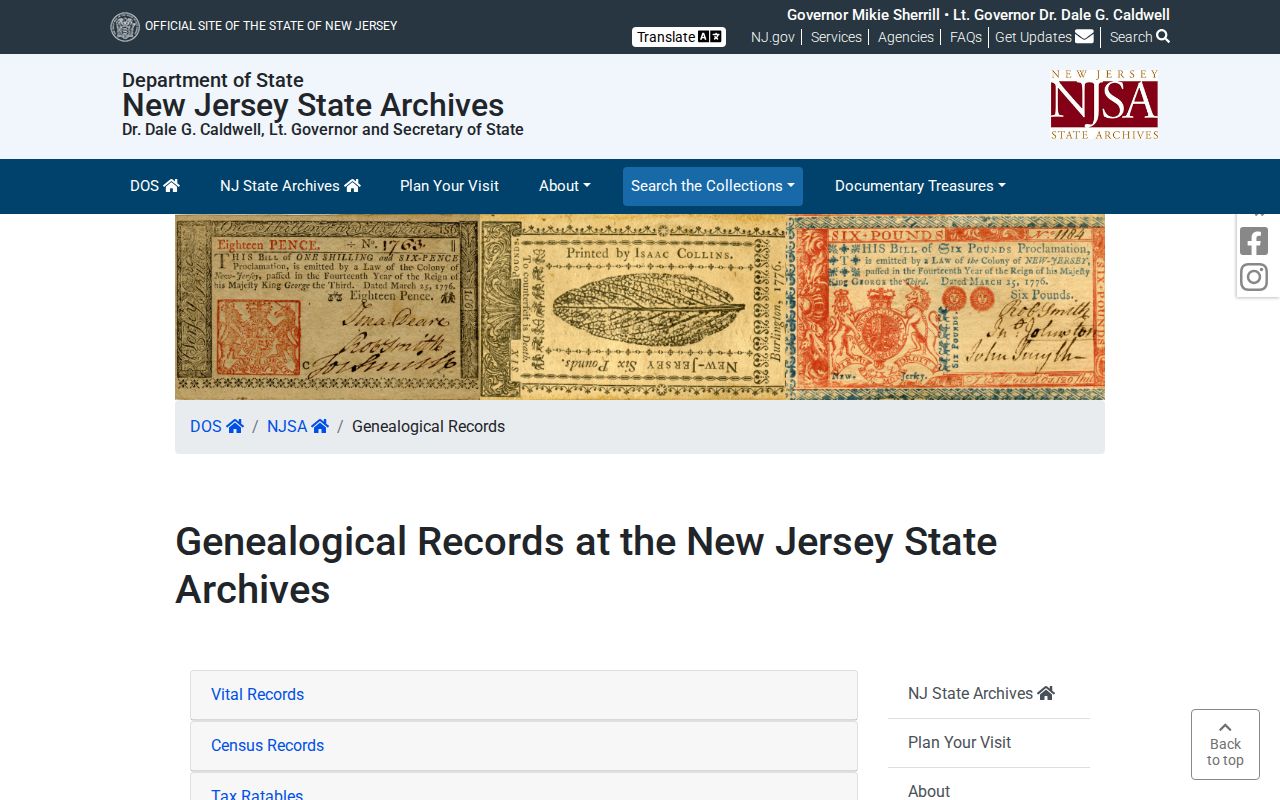
The Archives image points to the continuity collection for earlier deeds, census, probate, and newspaper work. It earns its keep once the Clerk's online index stops.
Test Previous Residents on Barnegat Sanborn Sheets
The Library of Congress Barnegat Sanborn set holds five fire-insurance sheets dated 1909 to 1910. A Sanborn sheet names no occupants. What it does show is physical evidence. It records whether a Barnegat building stood, its footprint and use, the construction material, and the street context of that era. That can test a Barnegat directory address. Does it refer to the same structure, or does a later building or street change call for another explanation?
Physical-history questions reach further than one map. The New Jersey Historic Preservation Office house-history guide points toward surveys, register files, newspapers, county and township histories, the State Archives, and Rutgers collections. Barnegat's historic core helps here. Older references to Bay Avenue, Main Street, Collins-town, and Lower Shore Roads make maps and historic surveys useful context for any previous-residents question. They still do not replace a legal-description match. The New Jersey house-history guide is the source for the image below.
A house-history guide can widen the document search whenever a deed plus a directory leave a Barnegat building's earlier form or named-place history unexplained.
Note: Sanborn maps establish building context for their date, not a complete list of people who lived at an address.
Date Barnegat Permit Evidence
Barnegat's construction permit search supplies a different kind of time marker for the same land. Searches run by street number and name, postal code, block, lot, qualifier, contractor, application or permit ID. Violation ID works as well. A result may date a Barnegat addition, pool, deck, occupancy filing, or demolition. It can also mark flood raising or a contractor tie. The township portal itself is newer than the deed index. It publishes no stated historical cutoff for older records.
Treat a permit as dating evidence, never as title proof. The online portal may not reach the period in question. In that case, an OPRA request to the right custodian should describe the address, block, lot, date span, and record type wanted. Permit cards, certificates of occupancy, zoning approvals, demolition or raising files, and code cases all exist as sources. Any of them may supply a missing phase of the property's story. Even so, each item still needs comparison against the parcel record and the recorded transfer.
Search Union Township for Barnegat Previous Residents
Many false stops in a previous-residents search trace back to jurisdiction. The larger Union Township formed in 1846 from Dover and Stafford townships, and the southern part of Monmouth County became Ocean County in 1850. So a family tied to a current Barnegat address can surface under an older township or county name. The land barely moved. The labels did. Search Barnegat, Union Township, Ocean County, and Monmouth County in whichever catalog or index fits the date, then use the Barnegat parcel description, spouse or widow notation, initials, and historic street references to separate similar results.
This layer is local story, and it rewards patience. The area's evolution from Quaker settlement to coastal port left names in deeds, newspapers, licenses, maritime material, and occupational directory lines. The trail is not a tidy sequence of modern municipal labels. It is a documented shift in jurisdiction and place names. Any old result deserves evaluation with its date before anyone attaches it to a present address.
Pair Barnegat Previous Residents With Censuses
Deeds identify people with a recorded interest. Directories and censuses add the household layer. Ocean County Library's genealogy resources include HeritageQuest, with city directories and census material, plus Ancestry Library Edition inside a library branch. Exact Barnegat directory shelf years are not published online. Ask the Barnegat reference desk to look for Barnegat, Union Township, Ocean County, or nearby community directories, reverse directories, telephone books, yearbooks, clippings, and microfilm. Details of those collections belong with the Barnegat city directory resources rather than an assumed published run.
- Start with an address or surname in one dated directory volume and record its publication title, year, page, line, street spelling, and any abbreviation key.
- Check at least one adjacent directory year for the same number, name variant, spouse notation, or occupation. A change between editions is a lead, not a move date.
- Pair the closest result with the federal census year. The 1950 census is the most recent publicly released federal decennial census in 2026.
- Where useful, check surviving New Jersey state-census material from 1855 to 1915, recognizing that the 1875 coverage is incomplete and indexes vary.
- Confirm the household clue against a deed, permit, newspaper notice, obituary, probate file, or map before treating it as the address history.
Two newspaper archives extend the reach. The Asbury Park Press historical archive covers 1905 to 2011. The New Jersey Courier Digital Archive spans 1852 to 1922 through Ocean County Library. A newspaper result can supply an address. It can also give a kinship, an event date, or a property clue. It remains a dated report, not automatic proof that someone lived there continuously.
Close Barnegat Previous Residents Trails
A Barnegat deed chain or directory trail sometimes simply ends. Probate and obituaries can explain the next record. The Ocean County Surrogate maintains permanent wills and estate-administration material on microfilm. The office also runs a computerized scanning system. Its public index is the starting point for a Barnegat estate or heir question. Secure images and eligible copies follow the office's own request process. A probate file may point to a personal representative, heir, or later mailing address. It still cannot substitute for a recorded Barnegat transfer.
Closures usually come from several sources at once. Ocean County Library newspaper resources, cemetery material, and a probate index can close a Barnegat past-resident trail. A later deed can supply both a date and a source. Keep the labels straight, though. An owner, grantee, permit applicant, heir, decedent, newspaper subject, and historical occupant are different descriptions. Preserving that nuance keeps a Barnegat house history honest. It also stops a partial record from becoming a claim about someone living there now. The Ocean County Surrogate page is the source for the probate-office image below.
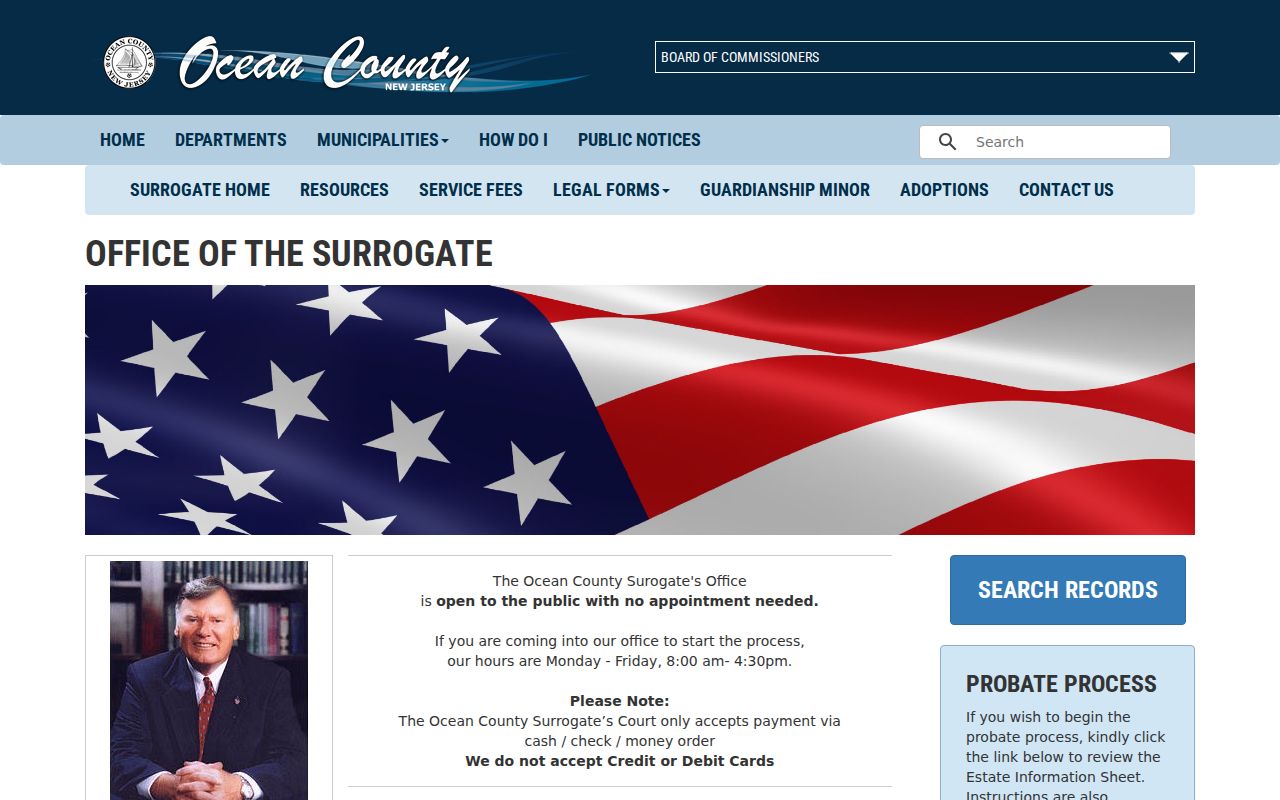
The Surrogate-office image represents the local probate route, one that can supplement a deed or newspaper trail whenever estate records enter the picture.
Lawful use. Barnegat previous-residents research is appropriate for family history, estate work, and personal property history. Do not use a past address or record result to locate, harass, or harm a living person.